
Vitamins for Liver Disease: What Helps and What Harms, Stage by Stage
Up to 40% of people in liver clinics take supplements, and supplements are now implicated in more than 16% of cases in the Drug Induced Liver Injury Network. Yet in cirrhosis, zinc and vitamin D often run low. Here's what US and European guidelines and NIH's LiverTox say about vitamins for liver disease, side by side for fatty liver, compensated and decompensated cirrhosis.
Up to 40% of people seen in liver clinics take supplements, according to NIH’s LiverTox. In the Drug Induced Liver Injury Network, herbal and dietary supplements were implicated in about 10% of liver injury cases, and more than 16% in the latest count. LiverTox adds that most people who use them don’t mention it to their primary care provider.
The other half of the story runs the opposite way. In cirrhosis, zinc deficiency shows up in as many as 84 to 96% of patients in some studies, according to the American College of Gastroenterology’s 2025 guideline, and US liver specialists call for routine checks for missing vitamins and minerals. Which side you land on depends on your stage and your blood work.
I built Tavita. I have stage 5 kidney disease and I’m on dialysis. I don’t have liver disease, so this guide comes from the guidelines and labels rather than my own chart. Below is what the major US and European guidelines say, side by side by stage. Treat it as questions for your hepatologist, dietitian or pharmacist, and check any change with your own care team first.
Want a second check on your own shelf? Tavita’s liver setting flags green tea extract, kava, red yeast rice and high-dose niacin the moment you add them. It’s free to start and you don’t need an account.
Vitamins for liver disease, stage by stage
Advice changes a lot between fatty liver and cirrhosis. Vitamin E is a fatty-liver question. Sodium and the bedtime snack are cirrhosis questions. Fatty liver here means MASLD (formerly NAFLD), or MASH (formerly NASH) when there is inflammation. Decompensated cirrhosis means complications such as fluid in the belly (ascites), confusion from the liver (hepatic encephalopathy) or jaundice.
| Nutrient or supplement | Fatty liver (MASLD / MASH) | Compensated cirrhosis | Decompensated cirrhosis |
|---|---|---|---|
| Vitamin E, 800 IU | Ask your care team. US guidelines allow it for some people with MASH without cirrhosis; Europe’s 2024 MASLD guideline does not recommend it | Not well studied in cirrhosis | Not well studied in cirrhosis |
| Vitamin D | Commonly checked | Commonly checked; supplemented if under 20 ng/mL | Commonly checked; supplemented if under 20 ng/mL |
| Zinc | Ask your care team if low or if you have symptoms | Ask your care team if low or if you have symptoms; taken with a meal | Ask your care team if low or if you have symptoms; taken with a meal |
| Multivitamin | No guideline advice found | Ask your care team, especially with frailty or muscle loss | “Could be justified,” says EASL; check the label for manganese |
| Thiamine (B1) | Ask if alcohol is involved | Ask, especially in alcohol-related disease | Ask; suspected Wernicke’s is an emergency |
| Vitamin K and other fat-soluble vitamins | Not flagged | Ask if you have jaundice or cholestatic disease | Ask; low vitamin K shows up as bleeding and bruising |
| Vitamin A supplements | Limit to basic daily needs | Limit; only if low, with monitoring | Limit; only if low, with monitoring |
| Niacin, high dose | A known cause of liver injury at high doses (LiverTox); ask before using | A known cause of liver injury at high doses (LiverTox); ask before using | A known cause of liver injury at high doses (LiverTox); ask before using |
| Iron | Ask your care team; with hemochromatosis a doctor may advise avoiding it | Ask your care team; corrected if low | Ask your care team; corrected if low |
| Manganese supplements | No guideline advice found | Probably best avoided, says EASL | Probably best avoided, says EASL |
| Calcium and vitamin D for bones | Ask if your bone scan T-score is below -1.5 | Ask if your bone scan T-score is below -1.5 | Ask if your bone scan T-score is below -1.5 |
| Herbal “liver” and weight-loss products | Not recommended, says EASL; several are known causes of liver injury | Several are known causes of liver injury; ask before using any | Several are known causes of liver injury; ask before using any |
| Milk thistle | Not recommended as a treatment | Unproven | Unproven |
| Protein | No restriction flagged | Don’t restrict: 1.2 to 1.5 g per kg of ideal body weight | Don’t restrict, even with hepatic encephalopathy |
| Late-evening snack | Not flagged | Commonly recommended | Commonly recommended |
| Sodium | Not flagged in these guidelines | Not flagged unless fluid builds up | Limit to about 2,000 mg a day with ascites, if your team sets it |
| Alcohol | Minimize | Stop completely | Stop completely |
| Raw shellfish, unpasteurized milk | No specific guidance found | Avoid | Avoid |
| Coffee | Linked to less liver damage | ACG suggests 2 or more cups a day | ACG suggests 2 or more cups a day |
| Acetaminophen (Tylenol) | Label: ask a doctor first | Label: ask a doctor first | Label: ask a doctor first |
Compiled from the AASLD guidance of 2021 and 2023, the ACG guideline of 2025, the EASL guidelines of 2019 and 2024, ESPEN 2019, NIH LiverTox, NIDDK and the Tylenol label, all linked in the sources below. “No guideline advice found” means none of these sources addressed it for that stage. Your own team’s plan comes first.
Which supplements are bad for your liver?
NIH’s LiverTox database scores how firmly each product is tied to liver injury, from A (well established) to E (unlikely).
View the data as a table
| Product | LiverTox score | Meaning |
|---|---|---|
| Green tea extract | A | well established cause |
| Turmeric | A | well established cause |
| Kava | A | well established cause |
| Black cohosh | A | well established cause |
| Niacin | A[HD] | well established cause, at high doses |
| Vitamin A | A[H] | well established cause, at high doses |
| Iron | A[H] | well established cause, at high doses |
| Ashwagandha | B | likely cause |
| Garcinia cambogia | B | likely cause |
| Kratom | B | likely cause |
| Red yeast rice | C | probable cause |
| Vitamin E | E | unlikely cause |
| Vitamin D | E | unlikely cause |
| Milk thistle | E | unlikely cause |
A LiverTox score describes how firmly a product is linked to liver injury in the published cases, not how often it happens. Turmeric is an A, and LiverTox still puts the incidence at roughly 1 in 10,000 to 1 in 100,000 people exposed.
Source: LiverTox, National Institute of Diabetes and Digestive and Kidney Diseases. Each product name in the table links to its own entry. Entries last updated between 2018 and 2025.
Herbal “liver support” and weight-loss products
Here is what LiverTox reports for each product:
- Green tea extract. LiverTox counts more than 100 published cases of liver injury from green tea extract, which shows up in weight-loss products such as Hydroxycut. Drinking green tea hasn’t been linked to liver injury.
- Turmeric. Turmeric now appears to be the most common cause of herbal liver injury in the United States. Most cases involve highly absorbable curcumin products, but some involve plain ground turmeric and even turmeric tea. LiverTox still puts the risk at roughly 1 in 10,000 to 1 in 100,000 people exposed.
- Ashwagandha. Ashwagandha is the entry most worth reading if you already have liver disease. LiverTox reports rare deaths and emergency liver transplants, “particularly in patients with preexisting liver disease and cirrhosis.”
- Kava. Kava has 50 to 100 published cases.
- Black cohosh. Black cohosh has more than fifty.
- Garcinia. Garcinia has at least a dozen reports in people taking multi-ingredient supplements.
For fatty liver specifically, the 2024 European guideline says nutraceuticals cannot be recommended, because there isn’t enough evidence that they reduce liver damage, or that they’re safe.
Milk thistle is the odd one out. LiverTox says it has not been implicated in causing liver injury, but the AASLD says silymarin, its extract, should not be used as a treatment for NASH because it offers no meaningful benefit on biopsy.
Vitamins and minerals that turn risky at high doses
Here is what the sources say about each of the four:
- Vitamin A. It is the main one. LiverTox says doses generally above 40,000 IU a day can be toxic, and that people with known chronic liver disease should avoid more than the minimal daily requirement, because liver disease seems to raise susceptibility. The AASLD says to monitor levels if vitamin A is replaced.
- Niacin. Above 500 mg a day it causes temporary rises in liver enzymes, usually without symptoms, in up to 20% of people, according to LiverTox, and serious liver injury is particularly common with high doses of the sustained-release form.
- Iron. It isn’t a blanket no. LiverTox says typical replacement doses of oral iron haven’t been convincingly linked to liver injury; the risk is overdose and iron overload. In cirrhosis, the EASL nutrition guideline says low iron should be considered and corrected. With hemochromatosis, NIDDK says a doctor may recommend avoiding iron supplements, and vitamin C supplements, which raise iron absorption.
- Manganese.It matters in cirrhosis. People with cirrhosis carry more of it, and EASL says it’s probably reasonable to avoid supplements that contain it. The ACG explains that it can be deposited in the brain, with symptoms that mimic Parkinson’s disease. On a multivitamin label, manganese is the line to check.
Your medicines: acetaminophen and the statin overlap
The Tylenol Extra Strength label says not to take more than 6 caplets (3,000 mg) in 24 hours unless a doctor directs it. It warns that severe liver damage may occur above 4,000 mg of acetaminophen in 24 hours, with other drugs that contain acetaminophen, or with 3 or more alcoholic drinks a day. It also says to ask a doctor before use if you have liver disease, and gives no separate limit for that. Neither did the guidelines we read, so that number comes from your own doctor.
Red yeast rice contains monacolin K, which LiverTox describes as chemically identical to lovastatin, a cholesterol-lowering statin. The amount varies by product, and some contain enough to act like the drug, so your prescriber should know about it if you already take a statin. Statins themselves are on your side: the AASLD calls them safe and recommended for heart risk in fatty liver, including compensated cirrhosis.
Which vitamins are commonly prescribed or checked in cirrhosis?
The AASLD’s 2021 guidance says vitamin and mineral deficiencies are common in cirrhosis whatever the cause, and recommends routine checks and repletion. ESPEN adds the limit: micronutrients have no proven therapeutic effect beyond preventing or correcting a deficiency. Test, then treat what’s low.
Here is where each one stands:
- Vitamin D. Deficiency is common in cirrhosis and has been linked to osteoporosis, infections, death and liver cancer, according to the ACG. EASL recommends checking the level and supplementing by mouth when it is under 20 ng/mL, aiming for above 30. LiverTox scores vitamin D as an unlikely cause of liver injury.
- Zinc. It should be considered when blood levels are low or there are signs of deficiency, says the ACG. ESPEN notes that randomized trials of oral zinc showed no effect on hepatic encephalopathy.
- Multivitamin. It is the pragmatic option. The AASLD calls it inexpensive and essentially free of side effects, and supports a course for people with cirrhosis who show frailty or muscle loss. EASL says one “could be justified” in decompensated cirrhosis.
- Thiamine (vitamin B1). Deficiency is especially common in alcohol-related cirrhosis, the ACG says, because of poor intake and alcohol’s direct effect on absorption. Wernicke’s encephalopathy, the brain emergency it can cause, is usually treated with intravenous thiamine.
- Fat-soluble vitamins.They go missing when bile doesn’t flow well (cholestasis), the AASLD says. Vitamin K is the one to know: the body doesn’t store it, so deficiency develops quickly and shows up as bleeding, bruising and a raised INR blood test. EASL says to always consider it in people who are jaundiced.
Vitamins for fatty liver: does vitamin E help?
This is where the guidelines disagree, even within Europe, so here are all four positions, with the people each one covers.
| Guideline | What it says | Who it covers |
|---|---|---|
| AASLD 2023 (US) | Vitamin E “can be considered in select individuals”; 800 IU daily of the natural form | NASH without type 2 diabetes or cirrhosis |
| ACG 2025 (US) | “We suggest” vitamin E 800 IU daily; conditional recommendation, low quality of evidence | MASH without cirrhosis |
| ESPEN 2019 (Europe, nutrition) | 800 IU daily “should be prescribed” | Non-diabetic adults with “histologically confirmed” NASH |
| EASL 2024 (Europe) | “Cannot be recommended” as a MASH treatment | Adults with MASH |
Quoted from each guideline’s full text. EASL 2024 is the joint EASL-EASD-EASO guideline on MASLD.
In the trials, vitamin E improved liver biopsies in 43% of adults against 19% on placebo, the ACG reports. Those adults had neither diabetes nor cirrhosis, and none of the studies found an improvement in fibrosis, the scarring itself. EASL weighs the lack of large phase III trials and the long-term risks, and says no. The AASLD lists hemorrhagic stroke and a possible prostate cancer risk as side effects to discuss before long-term high-dose use.
This one belongs with your doctor. One IU of natural vitamin E equals 0.67 mg, according to the NIH Office of Dietary Supplements, so 800 IU is about 536 mg. An ounce of sunflower seeds, the best vitamin E source in our table below, has 7.4 mg. Food doesn’t come close to the trial dose. LiverTox scores vitamin E itself as an unlikely cause of liver injury.
Is vitamin D good for fatty liver?
EASL’s nutrition guideline says it is advisable to check vitamin D in everyone with chronic liver disease, fatty liver included, and that higher doses may be needed in fatty liver to correct a deficiency. None of the guidelines we read recommends vitamin D as a treatment for fatty liver itself.
Coffee has better guideline support: EASL ties it to less liver damage in observational studies, and the ACG suggests 2 or more cups a day in chronic liver disease. NIDDK advises cutting simple sugars, especially fructose in soft drinks, sweetened tea and juice, and minimizing alcohol. The AASLD names type 2 diabetes among the reasons to be screened for advanced fibrosis. Our guide to vitamins for diabetics covers the blood sugar side.
Combinations that work, and pairs that compete
- Zinc and vitamin A. Zinc and vitamin A work together: the AASLD suggests replacing zinc when vitamin A doesn’t respond to replacement.
- Zinc and copper. Zinc and copper compete: high zinc doses may cause copper deficiency, and high doses of B6 or folate may reduce zinc absorption, per the same AASLD table.
- Vitamin D and calcium. Vitamin D goes with calcium when bone density is low, in AASLD and EASL guidance.
- Vitamin E and vitamin A. High-dose vitamin E works against vitamin A and can affect platelet function, the AASLD notes.
- Vitamin C and iron. With hemochromatosis, vitamin C supplements raise iron absorption, which is why NIDDK lists both.
When to take them: timing and food
None of the sources here names a best time of day for vitamin E or most other supplements. Three things do have backing:
- Zinc goes with a meal. The ACG says so, to cut nausea and the risk of copper deficiency.
- In cirrhosis, the snack before bed. The ACG strongly recommends a late-evening snack for muscle and to lower the risk of ascites and hepatic encephalopathy, because even 12 hours without food pushes the body to burn fat and protein. The AASLD suggests small meals every 3 to 4 hours while awake, with snacks such as a protein bar, a rice ball or yogurt.
- Antibiotics can need space from supplements.If you’re prescribed ciprofloxacin, the Cipro label says to take it 2 hours before or 6 hours after an antacid, a multivitamin, or a supplement with magnesium, calcium, aluminum, iron or zinc.
Food sources, and the ones that are rich but risky
These figures are per serving from USDA FoodData Central. Several of the richest foods come with a catch for someone with cirrhosis.
| Food | Serving | Rich in | Watch for |
|---|---|---|---|
| Oysters, cooked | 3 oz | Zinc 51.9 mg | Shellfish; never raw or undercooked |
| Oysters, raw | 6 medium | Zinc 33.0 mg | On NIDDK’s avoid list in cirrhosis |
| Beef chuck, lean, braised | 3 oz | Zinc 8.7 mg; protein 26.4 g | Nothing flagged |
| Lentils, boiled | 1 cup | Protein 17.9 g; zinc 2.5 mg; thiamine 0.33 mg | Manganese 0.98 mg (food, not a supplement) |
| Pork tenderloin, roasted | 3 oz | Thiamine 0.81 mg; protein 22.2 g | Nothing flagged |
| Rainbow trout, farmed, cooked | 3 oz | Vitamin D 16.1 mcg (645 IU) | Nothing flagged |
| Sockeye salmon, cooked | 3 oz | Vitamin D 14.2 mcg (570 IU) | Nothing flagged |
| Pink salmon, canned | 3 oz | Vitamin D 11.6 mcg (465 IU) | Sodium 343 mg |
| Cottage cheese, 2% | 1 cup | Protein 23.6 g | Sodium 696 mg |
| Sunflower seeds, dry roasted | 1 oz | Vitamin E 7.4 mg | Nothing flagged |
| Spinach, raw | 1 cup | Vitamin K 145 mcg | Ask if you take a blood thinner |
USDA FoodData Central, SR Legacy (April 2018), computed per serving from the dataset’s own portion weights. Each food links to its USDA record.
Raw oysters are the clearest “rich but risky” food. They’re the richest zinc food in the table, and zinc is often low in cirrhosis. But NIDDK tells people with cirrhosis to avoid raw or undercooked shellfish, fish and meat, and unpasteurized milk, because the bacteria or viruses in them may cause severe infections. The CDC lists liver disease among the conditions that raise the risk of vibriosis, says most people get it from raw or undercooked shellfish, particularly oysters, and reports that about 1 in 5 people with Vibrio vulnificus infection die, sometimes within a day or two. If oysters are on your plate at all, ask your team whether they’re comfortable with them fully cooked.
Lentils, chickpeas and pumpkin seeds bring zinc and plant protein, plus some manganese. EASL’s concern is manganese in supplements; none of the guidelines we read addressed it in food.
Sodium is the other catch, once fluid builds up. With ascites, EASL uses about 2 g of sodium a day (80 mmol), and the AASLD figure reported by the ACG is 88 mEq, about 2,000 mg. Both warn against going too far: EASL says not below 60 mmol a day, and the AASLD cites a study in which only 31% of patients stuck to a 2 g diet, and those who did ate 20% fewer calories.
View the data as a table
| Food | Serving | Sodium | Share of 2,000 mg |
|---|---|---|---|
| Dill pickle | 1 large | 1,092 mg | 55% |
| Soy sauce | 1 tbsp | 1,005 mg | 50% |
| Canned chicken noodle soup | 1/2 cup condensed | 844 mg | 42% |
| Cottage cheese, 2% | 1 cup | 696 mg | 35% |
| Frozen cheese pizza | 1 serving | 675 mg | 34% |
| Canned pink salmon | 3 oz | 343 mg | 17% |
| Fast-food hamburger | 1 plain single | 258 mg | 13% |
| White bread | 1 slice | 142 mg | 7% |
| Deli ham | 1 slice | 123 mg | 6% |
The 2,000 mg figure is a target for people with cirrhosis and ascites, and AASLD pairs it with diuretics. It is not general advice for fatty liver, and the ACG’s 2025 guideline doesn’t take a side on strict sodium limits for people already on diuretics.
Sources: USDA FoodData Central, SR Legacy (April 2018); each food in the table links to its record. EASL nutrition guideline, 2019 and ACG liver nutrition guideline, 2025.
Other organs and systems to watch
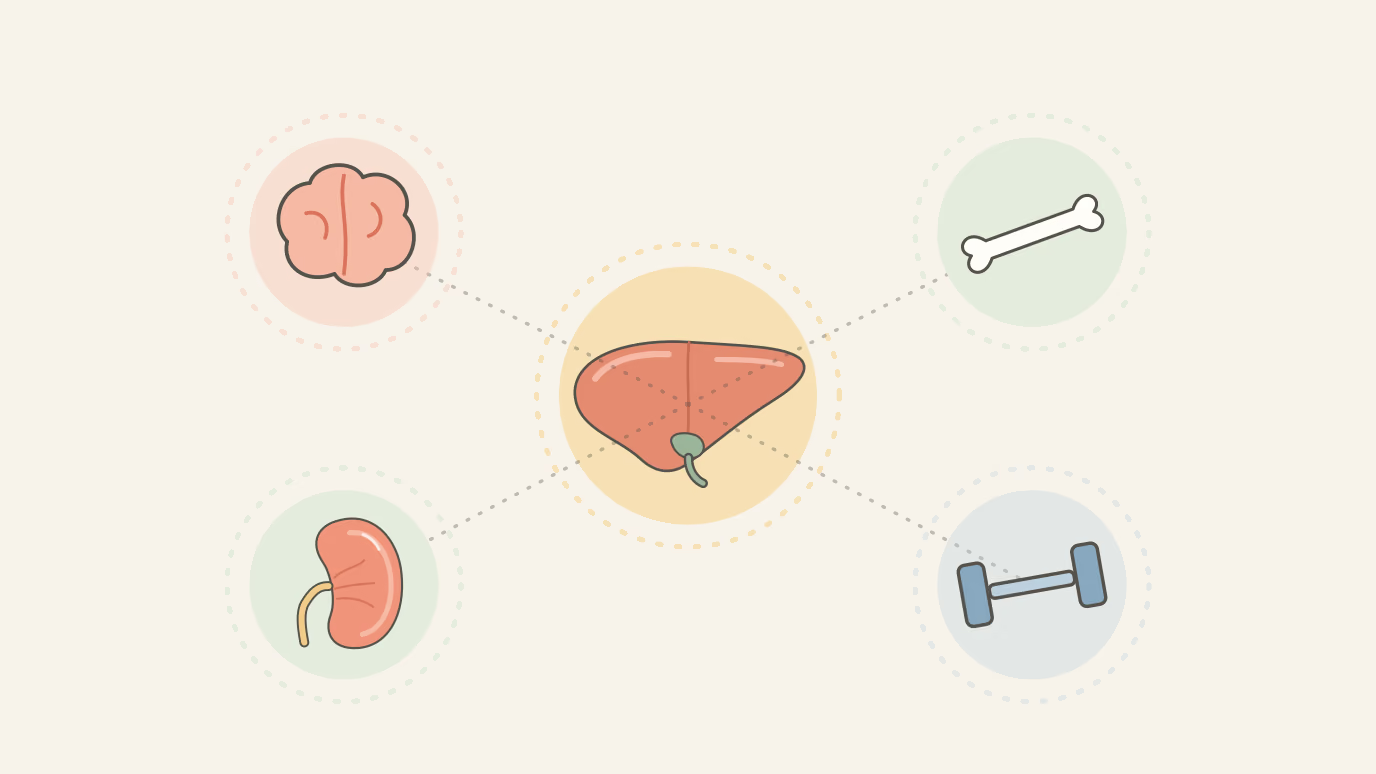
- Brain. Hepatic encephalopathy is confusion caused by the liver. The ACG suggests not restricting protein even then, and the AASLD recommends 1.2 to 1.5 g per kg of ideal body weight a day for adults with cirrhosis because it is safe and doesn’t worsen encephalopathy. The ACG also suggests more vegetarian protein for people with encephalopathy who need supplementation. Manganese and thiamine, covered above, are brain issues too.
- Muscle. Between 50% and 90% of people with cirrhosis have malnutrition, according to NIDDK. The AASLD reports muscle loss in 80% of people with decompensated alcohol-associated cirrhosis and about 60% with cirrhosis from other causes such as NASH. The bedtime snack and the protein target are muscle advice.
- Bones. About 30% of people with chronic liver disease have osteoporosis, and more of those with cholestatic diseases such as PBC and PSC, according to EASL’s nutrition guideline. It recommends calcium and vitamin D when a bone scan T-score is below -1.5, while noting there’s no definite data that these supplements prevent bone loss in liver disease.
- Kidneys and fluid. In cirrhosis, the hormones that hold on to salt switch on, which the ACG describes as active sodium and passive fluid retention. So your team watches sodium, diuretics and kidney function together. Fluid itself usually isn’t limited: the ACG says fluid restriction isn’t required for ascites, though free water may need limiting when blood sodium falls below 126 mEq/L. Our guide to vitamins for kidney disease covers the kidney side, and our sodium page covers the mineral.
Where Tavita fits
Tavita checks your medicines and supplements against each other and against the conditions you tell it about. Its liver setting has three levels: Mild, Moderate or Severe. There’s no fatty liver or cirrhosis option.
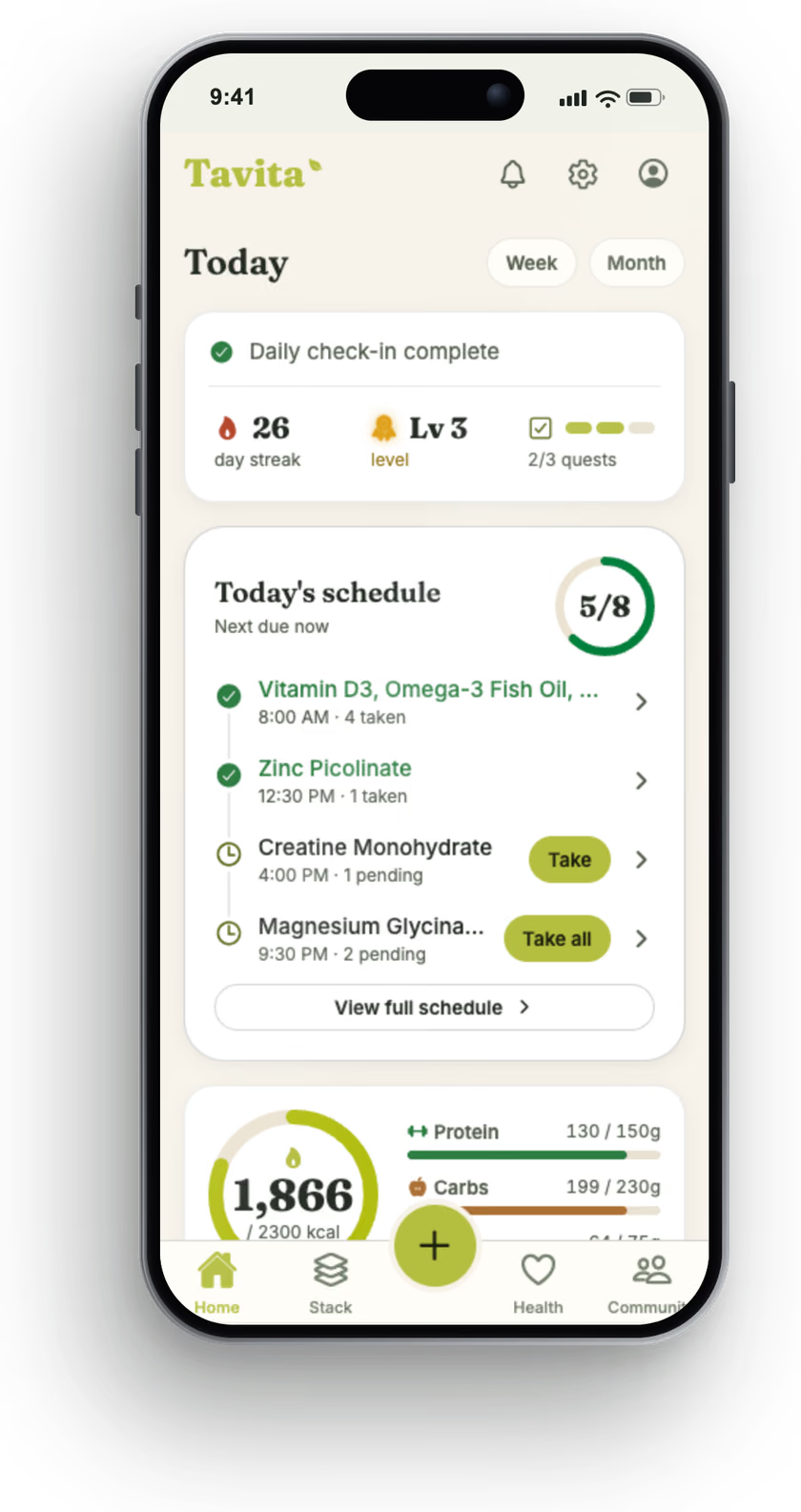
At Moderate or Severe, it blocks niacin at 500 mg a day or more, preformed vitamin A at the 3,000 mcg (10,000 IU) ceiling, green tea extract (brewed tea isn’t flagged), kava, comfrey, chaparral, germander, usnic acid and red yeast rice. It cautions on ashwagandha, turmeric, garcinia, black cohosh, iron at 45 mg a day or more, any preformed vitamin A and niacin from 100 mg. At Mild, everything is a caution. These checks run free, on your phone, the moment you add a supplement.
It treats red yeast rice with atorvastatin as a hard stop and flags alcohol with acetaminophen. When it builds your day, it keeps minerals such as zinc away from antibiotics like ciprofloxacin, placing the antibiotic 2 hours before or 6 hours after them. It has no sodium limit for ascites, no alcohol tracking, and it doesn’t set doses. It isn’t a medical device; if your care team says something different, follow your care team.
It’s free to start and you don’t need an account. The free plan includes one schedule build a month. Pro rebuilds anytime and costs $12.99 a month or $59.99 a year. Our pill reminder then tells you when each dose is due.
Common questions
What vitamins should I avoid with liver disease?
High doses of vitamin A and niacin come first: NIH's LiverTox scores both as well established causes of liver injury at high doses, and says people with chronic liver disease should avoid more vitamin A than the minimal daily requirement. With cirrhosis, EASL says it is probably reasonable to avoid supplements containing manganese. Iron isn't a blanket no; it's corrected when a blood test shows it's low, though NIDDK says a doctor may advise avoiding it with hemochromatosis.
What is the best vitamin for liver repair?
No vitamin has been shown to repair liver scarring. Vitamin E comes closest: it improved liver biopsies in adults with MASH who had neither diabetes nor cirrhosis. Even there, the ACG notes no improvement in fibrosis was found, and Europe's 2024 guideline does not recommend it. In cirrhosis, vitamins are used to correct deficiencies, not to treat the liver.
Which vitamin is not good for fatty liver?
High-dose vitamin A and high-dose niacin are the vitamins LiverTox ties firmly to liver injury. Vitamin E is a special case: US guidelines allow 800 IU a day for some people with MASH, but it carries risks, including a possible link to hemorrhagic stroke, so it's a decision to make with your doctor. Vitamin D is scored by LiverTox as an unlikely cause of liver injury.
Can too many supplements be bad for your liver?
Yes. Herbal and dietary supplements were implicated in more than 16% of cases in the Drug Induced Liver Injury Network's most recent count, up from about 10%, according to LiverTox. Up to 40% of people attending liver clinics use supplements, and LiverTox notes that most people who use supplements don't tell their primary care provider. Bringing every bottle to your next appointment is the simplest fix.
What is the best thing to take if you have cirrhosis?
There isn't one product. Guidelines recommend checking for deficiencies and treating what is found, often vitamin D, zinc or thiamine. AASLD supports a course of a multivitamin when there's frailty or muscle loss. Food matters as much as pills: the ACG strongly recommends a late-evening snack, and protein should not be restricted.
Are vitamins hard on the liver and kidneys?
Not at usual doses, for the vitamins LiverTox has scored lowest: it rates vitamins D and E as unlikely causes of liver injury, and typical replacement doses of oral iron haven't been convincingly linked to it. The liver risk sits mostly with high doses of vitamin A and niacin, and with herbal products. Kidney disease brings its own list, which our guide to vitamins for kidney disease covers.
Check your shelf before your liver does
Add your medicines and supplements once. Tavita checks them against your liver setting and against each other, so you have a clear list to take to your hepatologist or pharmacist. Check any change with your care team first.
Get TavitaFree to start, no account needed. A second check, not medical advice.
Sources and corrections
Guideline wording is quoted from each document’s full text. LiverTox scores were read from NIH’s official LiverTox archive in October 2026 and are linked to each live entry; LiverTox entries are revised, so check the current version. Several authors of the AASLD 2023 and EASL 2024 guidelines disclose pharmaceutical industry relationships; vitamin E is a generic product. The ACG 2025 authors declared no competing interests. If you spot an error, email support@tavita.app and we’ll correct it promptly. This article is general information, not medical advice. Don’t start, stop or change a supplement or medicine without talking to your care team.
- Rinella ME, et al. AASLD Practice Guidance on the clinical assessment and management of nonalcoholic fatty liver disease. Hepatology 2023;77(5):1797-1835.
- Lai JC, et al. Malnutrition, frailty, and sarcopenia in patients with cirrhosis: 2021 practice guidance by the AASLD. Hepatology 2021;74(3):1611-1644.
- Singal AK, et al. ACG Clinical Guideline: Malnutrition and nutritional recommendations in liver disease. Am J Gastroenterol 2025;120:950-972.
- EASL-EASD-EASO Clinical Practice Guidelines on the management of metabolic dysfunction-associated steatotic liver disease (MASLD). J Hepatol 2024;81(3):492-542; co-published in Diabetologia.
- European Association for the Study of the Liver. EASL Clinical Practice Guidelines on nutrition in chronic liver disease. J Hepatol 2019;70(1):172-193.
- Plauth M, et al. ESPEN guideline on clinical nutrition in liver disease. Clin Nutr 2019;38(2):485-521.
- LiverTox, National Institute of Diabetes and Digestive and Kidney Diseases. Herbal and Dietary Supplements, and entries for green tea, turmeric, kava kava, black cohosh, niacin, vitamin A, iron, ashwagandha, garcinia cambogia, kratom, red yeast rice, vitamin E, vitamin D and milk thistle.
- National Institute of Diabetes and Digestive and Kidney Diseases. Eating, diet and nutrition pages for cirrhosis, NAFLD and NASH, and hemochromatosis.
- Centers for Disease Control and Prevention. About Vibrio Infection.
- NIH Office of Dietary Supplements. Vitamin E: Fact Sheet for Health Professionals.
- Tylenol Extra Strength (acetaminophen). OTC drug label, DailyMed.
- Cipro (ciprofloxacin). Prescribing information, DailyMed. Section 7 and patient information.
- US Department of Agriculture. FoodData Central, SR Legacy (April 2018).
- Tavita’s liver setting, interaction checks and schedule rules are described from the app’s shipping code. Pricing and the free plan are as of October 2026.