
Vitamins for Heart Failure: What Your Medicines Change
The right vitamins for heart failure depend on your pills more than your diagnosis. A potassium top-up the furosemide label says may be needed is a named risk on the spironolactone, lisinopril and Entresto labels. Here is what the FDA labels, the 2022 US guideline and the main trials say about potassium, magnesium, iron, CoQ10, fish oil and salt substitutes, drug class by drug class.
A quarter teaspoon of a potassium chloride salt substitute holds about 690 mg of potassium, according to its USDA FoodData Central entry. That is more than a medium banana. If you take furosemide, the label says extra potassium may be needed. If you take spironolactone, lisinopril or Entresto, the labels name potassium salt substitutes as a risk for high potassium. Same heart failure, same shaker, opposite advice.
That is the honest answer to “what vitamins should I take for heart failure?” It depends far more on the pills in your organizer than on the diagnosis. So this guide is built around heart failure medicines, one drug class at a time, with every claim linked to the FDA label, the 2022 US guideline or the trial behind it.
A word on who is writing. I don’t have heart failure. I have stage 5 kidney disease and I’m on hemodialysis, and I built Tavita after years of juggling a potassium limit, a fluid limit and a long pill list. Reading the heart failure drug labels for this guide, I kept finding the same two warnings I live with: kidney function and potassium. Use what follows to prepare questions, and check any change with your own cardiologist, heart failure nurse or pharmacist first.
Want a second check on your own list? Tavita flags a potassium supplement or salt substitute when it sits next to an ACE inhibitor, an ARB or spironolactone. It’s free to start and you don’t need an account.
What vitamins should you take for heart failure?
The guideline answer is short. The 2022 AHA/ACC/HFSA heart failure guideline says that in heart failure with reduced ejection fraction, “vitamins, nutritional supplements, and hormonal therapy are not recommended other than to correct specific deficiencies.” It gives that a class 3, no benefit rating.
It also lists what hasn’t worked. Routine oral iron, thiamine, zinc, vitamin D and multivitamins “has not proven beneficial,” and the guideline notes “potential harm from vitamin E.” It adds that “drug-nutraceutical interactions remain unresolved.”
One caveat: that advice is written for reduced ejection fraction, with no parallel statement for preserved ejection fraction. But spironolactone, Entresto and SGLT2 inhibitors are used in both types, and the potassium and timing rules follow the drug.
Your pills decide: supplements by heart failure medicine
This table puts each common supplement or food issue against each drug class. Every filled cell comes from a label, the guideline or the 2016 AHA statement on drugs that can worsen heart failure. A blank cell means we did not find a statement in those sources. It does not mean safe. Ask your pharmacist about anything not listed.
| Supplement or food | Loop or thiazide diuretic | Spironolactone, eplerenone | ACE inhibitor, ARB, Entresto | SGLT2 inhibitor | Digoxin | Warfarin | Apixaban | Amiodarone | Statin |
|---|---|---|---|---|---|---|---|---|---|
| Potassium pill | Furosemide label: may be needed. Only if prescribed | Raises high-potassium risk (label). Avoid unless prescribed | Raises potassium (labels). Avoid unless prescribed | No potassium warning on label | Low potassium raises toxicity risk (label) | ||||
| Potassium salt substitute | Named on Aldactone label. Ask your care team | Named on Entresto and Zestril labels. Ask your care team | |||||||
| Magnesium | Can drop (labels). Often checked | Spironolactone can lower it (label) | Low magnesium raises toxicity risk (label) | ||||||
| Thiamine (B1) | Urine losses on furosemide in a small 1991 study | ||||||||
| Vitamin K foods | Keep intake consistent (label) | No vitamin K diet rule on label | |||||||
| Grapefruit | Eplerenone exposure up 25% (label) | ACE inhibitors and ARBs: listed interaction (AHA 2016) | Listed interaction (label) | Avoid (label) | Atorvastatin: over 1.2 L a day not recommended (label) | ||||
| St John’s wort | ACE inhibitors and ARBs: listed interaction (AHA 2016) | Lowers digoxin levels (label) | May decrease effect (label) | Avoid (label) | Lowers amiodarone levels (label) | ||||
| CoQ10 | May decrease effect (label) | Muscle-pain benefit not supported (NCCIH) | |||||||
| Licorice | Large amounts: low potassium (Lasix label) | On a bleeding-risk list (AHA 2016) | |||||||
| Red yeast rice | Contains a lovastatin twin (NCCIH) | ||||||||
| NSAID pain relievers | Blunt the diuretic effect (labels) | Reduce effect; raise potassium risk (labels) | Kidney risk (Entresto label) | ||||||
| Omega-3 | Any drug: the 2022 guideline says it may be reasonable as add-on therapy for people with symptoms (class 2b). Ask your care team | ||||||||
| Iron | Any drug: IV iron is reasonable for reduced ejection fraction with iron deficiency (class 2a). The guideline calls oral iron “not adequate” | ||||||||
| Vitamin D, zinc, multivitamin | Any drug: routine use “has not proven beneficial” (2022 guideline). Correct a measured deficiency only | ||||||||
| Vitamin E | Any drug: 400 IU a day or more may raise heart failure risk (AHA 2016); “potential harm” (2022 guideline). Commonly avoided | ||||||||
Labels: Lasix, hydrochlorothiazide, Aldactone, Inspra, Entresto, Zestril, Lanoxin, Jantoven (warfarin), Eliquis (apixaban), Pacerone (amiodarone), Farxiga, Jardiance and Lipitor (atorvastatin), all on DailyMed. Also the 2022 AHA/ACC/HFSA guideline, the 2016 AHA statement, NCCIH and Seligmann 1991. Full links are in the sources below.
What’s commonly checked or prescribed
Is potassium bad for heart failure patients?
Neither good nor bad. It depends on which way your drugs push it. Water pills pull potassium out. The Lasix label warns that low potassium can develop “especially with brisk diuresis” and says “potassium supplements and/or dietary measures may be needed.” The hydrochlorothiazide label lists the same risk.
Spironolactone and eplerenone push the other way. For reduced ejection fraction, the guideline recommends them when kidney function (eGFR) is above 30 and potassium is below 5.0 mEq/L, with close monitoring, and says to stop them if potassium can’t be kept under 5.5. The Aldactone label says to check potassium within a week of starting or changing the dose, and that the risk rises with “impaired renal function or concomitant potassium supplementation, potassium-containing salt substitutes” or ACE inhibitors and ARBs.
Many people take a diuretic and spironolactone together, so the two pulls can cancel or not. That is why the answer comes from your blood test, not from a food list. MedlinePlus puts it well for furosemide: if your doctor tells you to eat more potassium-rich foods, “follow these instructions carefully.” More on potassium itself is on our potassium page.
Can heart failure patients take magnesium supplements?
Only if your care team says so. Furosemide, hydrochlorothiazide and spironolactone all list low magnesium on their labels. The digoxin label says low potassium or low magnesium “may predispose to digoxin toxicity.” The guideline includes magnesium in the first blood work for heart failure.
None of the sources here sets a magnesium dose or names a best form for heart failure, glycinate or otherwise. So the useful first step is the number: ask what your last magnesium level was. If you also have kidney disease, the decision is even more a job for your team. See our magnesium page for food sources.
Iron deficiency: a blood test, not a store-bought pill
Iron deficiency is present in about half of people with reduced ejection fraction, according to the IRONOUT-HF trial report. That same trial gave oral iron (150 mg twice a day) or placebo for 16 weeks and found no significant difference in exercise capacity. Its authors concluded the results “do not support use of oral iron supplementation” in this group.
The US guideline agrees that oral iron “is not adequate” here and calls IV iron reasonable for people with reduced ejection fraction and iron deficiency. It defines deficiency as ferritin under 100, or 100 to 300 with a transferrin saturation under 20%. Europe’s 2023 ESC update recommends screening for iron deficiency and correcting it in reduced and mildly reduced ejection fraction, a 2026 British Journal of Cardiology review notes. The same review reports that HEART-FID, a large US trial, did not significantly cut heart failure hospital stays at one year, though function improved modestly. Our iron page covers the nutrient itself.
Thiamine and water pills
A small 1991 study found signs of thiamine deficiency in 21 of 23 people taking furosemide for heart failure, against 2 of 16 controls, with “inappropriately high” thiamine in the urine. The Linus Pauling Institute summarizes later work: trials of oral thiamine alone have not found a benefit. The guideline lists thiamine among the supplements without evidence of benefit. Our thiamine page lists food sources.
Supplements to avoid with heart failure, and why
Salt substitutes
This is the one that catches people, because it looks like the healthy swap. The Aldactone, Entresto and Zestril (lisinopril) labels all name potassium-containing salt substitutes. Here is the size of the swap.
View the data as a table
| Product, 1/4 tsp | Sodium | Potassium |
|---|---|---|
| Table salt | 581 mg | 0 mg |
| Half-salt blend | 290 mg | 350 mg |
| Salt substitute | 0 mg | 690 mg |
| Medium banana, for comparison | 1 mg | 422 mg |
The two blends are specific products as listed by their maker in FoodData Central: Morton Lite Salt and Morton Salt Substitute. Branded entries can lag a reformulation, so check the label on the jar you own.
Source: USDA FoodData Central, table salt, Morton Lite Salt, Morton Salt Substitute and raw banana. Pulled 4 October 2026.
Vitamin E, licorice and stimulants
The 2016 AHA statement and NCCIH flag several products here:
- Vitamin E.The 2016 statement says 400 IU a day or more “may increase the risk of developing new-onset HF” and that “it seems prudent to avoid it” once you have heart failure.
- Licorice. Listed in the statement for fluid retention. NCCIH adds that even small amounts of licorice root have been linked to severe effects in people with heart or kidney conditions.
- Ginseng. Listed for a weaker diuretic response.
- Ephedra-like products. Quoting older guidance, the statement says they should be avoided for their effect on blood pressure and heart rate.
- Bitter orange. It contains p-synephrine, which NCCIH describes as structurally similar to ephedrine, though it acts differently in the body.
Red yeast rice and St John’s wort
NCCIH notes that monacolin K in red yeast rice “is structurally identical to the medicine lovastatin.” On top of a prescribed statin, that is a second statin. St John’s wort interacts with several heart medicines:
- It lowers digoxin and amiodarone levels.
- It may weaken warfarin.
- It sits on the Eliquis label’s avoid list.
Pain relievers, cold medicine and hidden sodium
Three over-the-counter issues come up in the guideline and the 2016 statement:
- Pain relievers.The guideline says NSAIDs “worsen HF symptoms and should be avoided or withdrawn whenever possible” in reduced ejection fraction.
- Cold medicine. The 2016 statement warns that many cough, cold, allergy and sinus products may contain ibuprofen, phenylephrine or pseudoephedrine.
- Hidden sodium. The 2016 statement also counted sodium in medicines: in 2016, Gaviscon taken at a 30 mL dose four times a day added more than 400 mg of sodium a day.
The statement recommends teaching people with heart failure to check with their provider before any over-the-counter product or supplement.
Can heart failure patients take CoQ10?
CoQ10 has the most hopeful trial and the most caveats. In Q-SYMBIO, 420 patients took CoQ10 (100 mg three times a day) or placebo. Short-term measures didn’t change. Over two years, major cardiac events were 15% with CoQ10 against 26% on placebo. The study was supported by the International Coenzyme Q10 Association, Pharma Nord and Kaneka, as reported by Healio: an industry association and two companies that supply CoQ10.
The 2022 guideline mentions the result, then says “concerns about slow recruitment in this trial have tempered enthusiasm.” NCCIH calls the heart failure research “inconclusive” and says the evidence does not support CoQ10 for statin muscle pain. And the warfarin label lists CoQ10 among botanicals that may decrease warfarin’s effect. So, do cardiologists recommend CoQ10? The guideline doesn’t, and yours should decide.
Can you take fish oil with heart failure?
Omega-3 gets a cautious yes from the guideline: “may be reasonable” as add-on therapy for people with symptoms (class 2b). The trial it describes is GISSI-HF, where 6,975 patients took 1 g of omega-3 a day or placebo for a median 3.9 years. Deaths were 27% against 29%, and 56 people needed treating for that long to prevent one death. The guideline also lists atrial fibrillation risk with omega-3 as an open question. That dose is what the study used, not a recommendation. More on EPA and DHA.
Can I take vitamin D with heart failure?
If a test shows you’re low, your team may treat it. As a heart treatment, the trial data aren’t encouraging. In EVITA, 400 people with advanced heart failure and low vitamin D took 4,000 IU a day or placebo for three years. Deaths didn’t fall (19.6% against 17.9%), more people needed mechanical heart support, and the authors urged caution with long-term moderately high doses. See our vitamin D page.
Combinations that work and pairs that compete
Most of the pairs worth knowing involve two drugs and a mineral:
- Diuretics, digoxin and amiodarone. Diuretics lower potassium and magnesium, and low levels of either make digoxin toxicity more likely. The digoxin label also says amiodarone raises digoxin levels by about 70%, and the amiodarone label tells prescribers to lower warfarin and digoxin doses when the drugs are combined.
- Spironolactone with an ACE inhibitor or ARB.It “mildly increases the risk of hyperkalemia,” the guideline says, and the risk was lower with Entresto in its main trial.
- SGLT2 inhibitors. They are different again. Neither the Farxiga nor the Jardiance label carries a potassium warning, and a 2022 analysis of almost 50,000 people in diabetes and kidney trials found they lowered the risk of serious high potassium. Their labels focus on fluid instead: check for and correct low fluid volume before starting.
- Warfarin and vitamin K.This is a pair to keep steady rather than avoid. The label asks for “a consistent amount of vitamin K” and no drastic changes “such as eating large amounts of green leafy vegetables.” Apixaban isn’t a vitamin K blocker, and its label has no vitamin K diet rule. More on vitamin K1.
Timing: with food, without food, and when in the day
| Medicine | What the label or official guide says |
|---|---|
| Furosemide | Once or twice daily, for example 8 am and 2 pm (label). Keep 2 hours from sucralfate (label) |
| Spironolactone | With or without food, but consistently |
| Entresto | With or without food |
| Empagliflozin (Jardiance) | Once daily in the morning, with or without food |
| Dapagliflozin (Farxiga) | With or without food |
| Apixaban (Eliquis) | Food does not affect how much is absorbed |
| Amiodarone | Consistently with regard to meals |
| Atorvastatin | Once daily, with or without food |
From each product’s FDA label on DailyMed, and MedlinePlus for furosemide.
Most people ask about diuretics and mornings. The US Lasix label gives 8 am and 2 pm as an example for a twice-daily dose, and MedlinePlus says that for swelling it may be taken daily or only on certain days, as your doctor directs. The UK’s NHS suggests every morning for a once-daily dose, so you can plan around the bathroom trips. If you take two doses, ask your team when the second one should go.
Food sources, and foods that are rich but risky
On sodium, the guideline says “avoiding excessive sodium intake is reasonable to reduce congestive symptoms” but gives no number for heart failure. It notes there are no trials supporting the general 2,300 mg limit in heart failure, and that strict restriction can leave a diet short on nutrients. Then SODIUM-HF tested a target under 1,500 mg a day in 806 patients and found it “did not reduce clinical events.” Sodium still adds up fast in packaged food, as the chart shows.
View the data as a table
| Food | Serving | Sodium | FDC ID |
|---|---|---|---|
| Chunky chicken noodle soup | 1 can, 530 g | 1,622 mg | 171148 |
| Dill pickle | 1 large, 135 g | 1,092 mg | 168558 |
| White beans, canned | 1 cup, 262 g | 891 mg | 175204 |
| Soy sauce | 1 tbsp, 16 g | 879 mg | 174277 |
| Condensed chicken noodle soup | 1/2 cup before adding water | 844 mg | 171543 |
| Chunky chicken noodle soup | 1 cup, 243 g | 744 mg | 171148 |
| Table salt | 1/4 tsp, 1.5 g | 581 mg | 173468 |
| Deli turkey breast | 2 slices, 32 g | 287 mg | 172941 |
| Whole-wheat bread | 1 slice, 32 g | 146 mg | 172688 |
No reference line here on purpose. The 2022 US heart failure guideline does not set a sodium number for heart failure, and it says there are no trials to support the general 2,300 mg a day limit in people with heart failure.
Source: USDA FoodData Central, SR Legacy: chunky soup, dill pickle, white beans, soy sauce, condensed soup, table salt, turkey breast and whole-wheat bread. Pulled 4 October 2026.
Potassium-rich foods are the “rich but risky” group. On furosemide you may be told to eat more of them. On spironolactone, the label warns about extra potassium, and more so with weaker kidneys. The guideline notes the DASH eating pattern is rich in potassium and may be linked to fewer heart failure admissions. Your potassium result and your team decide which way you lean.
| Food, serving | Potassium | Magnesium | Sodium | Vitamin K |
|---|---|---|---|---|
| White beans, canned, 1 cup | 1,189 mg | 134 mg | 891 mg | 8 µg |
| Baked potato with skin, 1 medium | 926 mg | 48 mg | 17 mg | 4 µg |
| Spinach, boiled, 1 cup | 839 mg | 157 mg | 126 mg | 888 µg |
| Dried apricots, 1/2 cup | 755 mg | 21 mg | 6 mg | 2 µg |
| Lentils, boiled, 1 cup | 731 mg | 71 mg | 4 mg | 3 µg |
| Avocado, 1 cup cubes | 728 mg | 44 mg | 10 mg | 32 µg |
| Orange juice, 1 cup | 496 mg | 27 mg | 2 mg | 0 µg |
| Banana, 1 medium | 422 mg | 32 mg | 1 mg | 1 µg |
| Salmon, farmed, cooked, 3 oz | 326 mg | 26 mg | 52 mg | 0 µg |
| Pumpkin seeds, 1 oz | 229 mg | 168 mg | 2 mg | 2 µg |
| Kale, boiled, 1 cup | 170 mg | 30 mg | 19 mg | 494 µg |
USDA FoodData Central (SR Legacy), FDC IDs 175204, 170093, 168463, 173941, 172421, 171705, 169098, 173944, 175168, 170556 and 169238, pulled 4 October 2026 and rounded. The canned beans show both problems at once: lots of potassium and a lot of sodium.
Thiamine is easier: pork tenderloin has about 0.8 mg in 3 ounces, and black beans about 0.4 mg a cup (FDC 168250, 173735). If you take warfarin, the spinach and kale rows matter for consistency, not avoidance.
Other organs and systems to watch
- Kidneys. Spironolactone and eplerenone depend on kidney function, and the Inspra label is contraindicated when creatinine clearance is 30 or lower. The Entresto and Zestril labels both list kidney impairment as a high-potassium risk. This overlap is where my own world meets heart failure, and our vitamins for kidney disease guide covers potassium from the kidney side.
- Blood sugar. The Lasix label says furosemide may raise blood glucose, and spironolactone lists high blood sugar. SGLT2 inhibitors carry a ketoacidosis warning. If you also have diabetes, our vitamins for diabetics guide picks up from there.
- Nutrition overall.The guideline says people with advanced heart failure have “the greatest risk of developing cachexia or malnutrition,” so weight loss or a poor appetite is worth raising with your team.
Questions to take to your next appointment
- What were my last potassium and magnesium results, and which way are my medicines pushing them?
- Is a salt substitute or a potassium supplement safe with my exact list?
- Have my iron levels (ferritin and transferrin saturation) been checked?
- Does anything I bought over the counter clash with my heart medicines?
- Do you want me to keep a fluid limit, and what number?
Where Tavita fits
Tavita checks your medicines and supplements against each other. For the heart medicines in this guide, it:
- stops the schedule when a potassium supplement or salt substitute sits next to an ACE inhibitor, an ARB or spironolactone
- flags vitamin K supplements and St John’s wort with warfarin
- tells you to keep leafy greens about the same day to day if you take warfarin
- flags digoxin with a loop or thiazide diuretic, because of low potassium
- flags licorice with furosemide, and grapefruit with statins
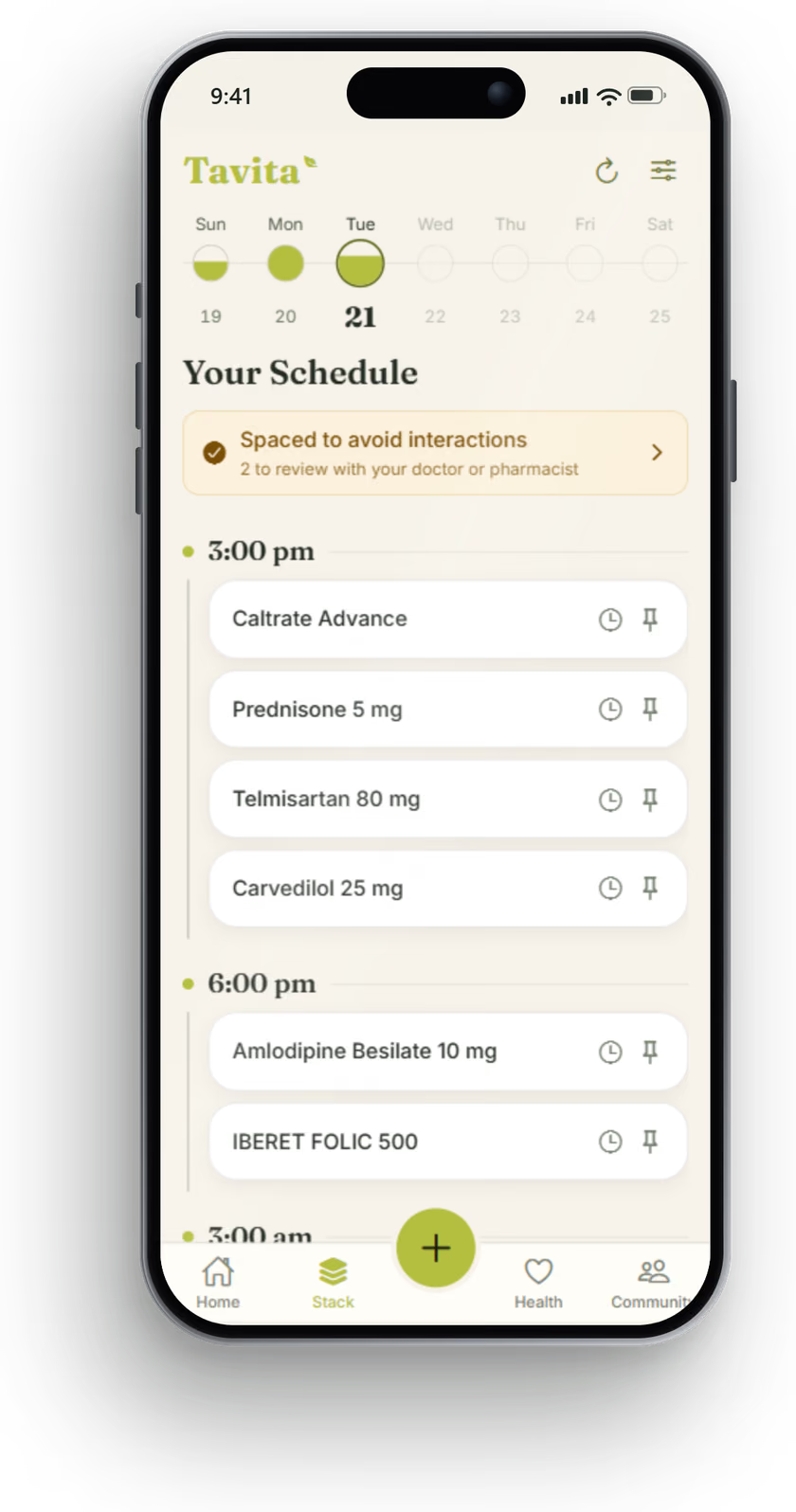
The heart setting is a simple yes or no. There is no heart failure mode, and the app has no rules for thiamine or CoQ10. You can switch on a fluid limit yourself; it tracks against the limit your care team gave you and never invents a number.
It’s free to start and you don’t need an account. The free plan includes one schedule build a month. Pro rebuilds anytime and costs $12.99 a month or $59.99 a year. It isn’t a medical device and doesn’t set doses. If your care team says something different, follow your care team.
Common questions
What supplements are recommended for people with heart failure?
Very few, as a routine. The 2022 US guideline says that with reduced ejection fraction, vitamins and supplements are not recommended other than to correct specific deficiencies. It calls IV iron reasonable for proven iron deficiency, and omega-3 possibly reasonable as an add-on for people with symptoms. On furosemide, the label says potassium supplements may be needed, a decision your team makes from blood tests.
Which vitamin is not good for heart patients?
Vitamin E is the one heart failure guidance names. A 2016 American Heart Association statement says 400 IU a day or more may raise the risk of new heart failure and that it seems prudent to avoid it once you have heart failure. The 2022 guideline lists potential harm. Vitamin K is different: if you take warfarin, the label asks you to keep the amount you eat consistent.
How much CoQ10 should I take for heart failure?
No heart failure guideline gives a CoQ10 dose. The largest trial, Q-SYMBIO, used 100 mg three times a day, which is what one study used, not advice. It was funded by an industry association and two companies that supply CoQ10, and the 2022 guideline says concerns about its slow recruitment have tempered enthusiasm. The warfarin label lists CoQ10 as able to decrease warfarin's effect.
Can heart failure patients take magnesium supplements?
Only if your care team says so. Loop and thiazide diuretics and spironolactone list low magnesium among their side effects, and the digoxin label says low magnesium makes digoxin toxicity more likely. The 2022 guideline includes magnesium in the first blood work for heart failure. Ask for that number, and about your kidneys, before you buy a pill.
Is a salt substitute safe for heart failure patients?
It depends on your medicines. A quarter teaspoon of one common potassium chloride substitute has about 690 mg of potassium. The spironolactone, lisinopril and Entresto labels all name potassium-containing salt substitutes as a risk for high potassium. On those drugs, especially with kidney disease, ask your care team first.
What can make heart failure worse?
Among things sold without a prescription: NSAID pain relievers such as ibuprofen, which the 2022 guideline says worsen heart failure with reduced ejection fraction; cold and sinus products containing NSAIDs, phenylephrine or pseudoephedrine; licorice, which can cause fluid retention; and sodium hidden in some medicines and antacids. Ask your pharmacist to check anything over the counter.
Same supplement, different answer on different pills
Add your heart medicines and supplements once. Tavita checks them against each other and flags the pairs in this guide, so you have a clear list to take to your cardiologist or pharmacist before changing anything.
Get TavitaFree to start, no account needed. A second check, not medical advice.
Sources and corrections
Drug statements come from each product’s FDA label on DailyMed, and food values from USDA FoodData Central, both read on 4 October 2026. Labels are revised, so check the current version or ask your pharmacist. Q-SYMBIO was funded by an industry association and two companies that supply CoQ10. If you spot an error, email support@tavita.app and we’ll correct it promptly. This article is general information, not medical advice. Don’t start, stop or change a medicine or supplement without talking to your care team.
- Heidenreich PA et al. 2022 AHA/ACC/HFSA Guideline for the Management of Heart Failure. J Am Coll Cardiol 2022;79(17):e263-e421. Pages e281, e299-e300, e306-e312, e328, e337, e351-e352, e369.
- Page RL 2nd et al. Drugs That May Cause or Exacerbate Heart Failure: A Scientific Statement From the American Heart Association. Circulation 2016;134(6):e32-e69.
- McDonagh TA et al. 2023 Focused Update of the 2021 ESC Guidelines for heart failure. Eur Heart J 2023;44:3627-39, as summarized in Ironing out the details: a comprehensive review of iron therapy in heart failure, British Journal of Cardiology, September 2026.
- Lewis GD et al. Effect of oral iron repletion on exercise capacity in HFrEF with iron deficiency (IRONOUT HF). JAMA 2017;317(19):1958-66.
- Mortensen SA et al. The effect of coenzyme Q10 on morbidity and mortality in chronic heart failure (Q-SYMBIO). JACC Heart Fail 2014;2(6):641-9. Funding as reported by Healio, December 2014.
- Ezekowitz JA et al. Reduction of dietary sodium to less than 100 mmol in heart failure (SODIUM-HF). Lancet 2022;399:1391-1400.
- GISSI-HF investigators (Tavazzi L et al.). Effect of n-3 polyunsaturated fatty acids in patients with chronic heart failure. Lancet 2008;372:1223-30.
- Zittermann A et al. Effect of vitamin D on all-cause mortality in heart failure (EVITA). Eur Heart J 2017;38:2279-86.
- Seligmann H et al. Thiamine deficiency in patients with congestive heart failure receiving long-term furosemide therapy. Am J Med 1991;91(2):151-5.
- Neuen BL et al. Effects of SGLT2 inhibitors on risk of hyperkalemia. Circulation 2022;145:1460-70.
- FDA prescribing information on DailyMed: Lasix, hydrochlorothiazide, Aldactone, Inspra, Entresto, Zestril, Lanoxin, Jantoven, Eliquis, Pacerone, Farxiga, Jardiance and Lipitor.
- National Center for Complementary and Integrative Health: Red Yeast Rice, Coenzyme Q10, Licorice Root and Bitter Orange.
- MedlinePlus, Furosemide. NHS, How and when to take furosemide.
- Linus Pauling Institute, Oregon State University. Heart Failure.
- USDA FoodData Central, SR Legacy and Branded Foods entries as listed under each chart and table.
- Tavita’s heart setting and interaction rules are described from the app’s shipping code. Pricing and the free plan are as of October 2026.