
Pill reminders for iPhone and Android
A pill reminder app that times your doses and checks them first
A typical pill reminder app rings at whatever time you type in. Tavita plans your doses around when you wake, eat, and sleep, then reminds you when each one is due.
Before that, it checks every medicine and supplement you add against the rest of your list. If two of them are a dangerous mix, you hear about it before you take them.
Free to download on iPhone and Android
No account and no ads. Pro is optional.
Why timing matters
A reminder is only as good as the time it picks
An 8 a.m. alarm works fine for one pill. It gets harder when you take five things and a few of them shouldn't go down together.
Picture a normal morning. Levothyroxine, a common thyroid pill, should be taken at least 4 hours before or after a calcium or iron supplement, according to MedlinePlus's levothyroxine guide. Iron and calcium also get in each other's way, so taking them together means you absorb less of both (why calcium and iron compete). And vitamin Dabsorbs best with a meal that has some fat in it. A plain alarm doesn't know any of that. It just rings.
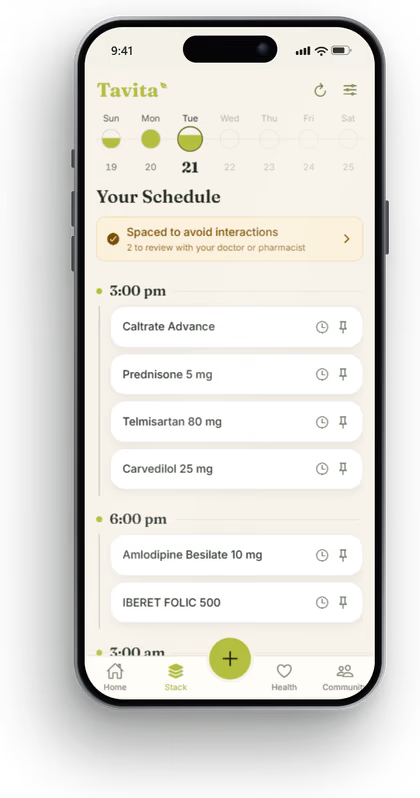
Tavita's schedule does know. It keeps a thyroid pill hours away from calcium and iron, keeps iron and calcium apart, and puts fat-soluble vitamins with a meal. Then it reminds you at those times. Doses due at the same moment arrive as one notification, and once you've marked them taken, that reminder stays quiet for the rest of the day.
What you get
What the reminders actually do
Free covers everything on this list. The schedule itself is built once a month on the free plan.
Times built around your day
Tell Tavita when you usually wake up, eat, and go to bed. It builds a daily schedule from that and sends a reminder at each dose time.
A check before every new pill
Each medicine or supplement you add is checked against everything else on your list, using a built-in library of over 15,000 known interaction pairs from FDA labels, NIH sources, and published research.
Taken or skipped in one tap
Mark each dose from the Today screen, or mark a whole time slot at once, and see how your week went.
A heads-up before you run out
Enter how many pills are in the bottle and Tavita warns you when you're down to about a week's supply.
Pregnancy and breastfeeding flags
Flags supplements and herbs to avoid while pregnant or nursing, and reminds you to check certain medicines with your prescriber.
Food clashes, too
Flags common food problems with medicines, like grapefruit with some statins or vitamin K with warfarin.
Before the first dose
What changes when your reminder app knows your whole list
Say you've taken St. John's wort for months, and your doctor starts you on sertraline. The moment you add the new prescription by its generic name, Tavita flags the pair. It's one of the serious combinations the free instant check looks for, and that check works offline.
That turns into a question for your doctor or pharmacist, asked before the first dose instead of after a bad week. Tavita won't tell you to stop anything. It points out the pair so the people who know your health can decide.
When you build your schedule, you also get a safety report. It goes further than the instant check and covers moderate interactions, like the thyroid and calcium example above.
Questions
Pill reminder questions, answered
Does the iPhone have a pill reminder?
Yes. Apple's Health app has a Medications section where you add what you take, set a schedule, and get reminders to log each dose (Apple's guide to adding and logging medications). In the US it also shows interactions between the medicines you've listed. The difference is that you choose every time yourself. Tavita plans the times for you around your meals and sleep, and spaces out the things that shouldn't be taken together.
How do I set a pill reminder on my phone?
In Tavita, add each medicine or supplement by typing its name or scanning a supplement's barcode. Tell the app roughly when you wake up, eat, and go to bed, then build your schedule and allow notifications when your phone asks. You'll get a reminder at each dose time. If you only take one pill a day, a daily alarm in your phone's clock app works too.
What is the best app to remind me to take my tablets?
It depends on how many you take. For a single tablet, any reminder will do, including the one built into your phone. Once you're taking several medicines, or adding vitamins and supplements on top, look for an app that checks them against each other and spaces out the ones that clash. That's the job Tavita was built for. Either way, tell your pharmacist whenever something on your list changes.
Is there a free medication tracker?
Yes. Tavita is free to download, has no ads, and doesn't need an account. The free version includes the instant interaction check, dose reminders, the taken and skipped log, refill heads-ups, and one schedule build a month. Pro is optional and costs $12.99 a month or $59.99 a year. On iPhone, Apple's Health app is free too.
Is there an app to track when you take medication?
Tavita does this. When a reminder comes in, open the Today screen and mark the dose taken or skipped. Doses due at the same time can be marked together. The app keeps that history, so you can look back and see how your week went.
Does Tavita work on Apple Watch?
Not as a watch app. Tavita doesn't have an Apple Watch app yet. Its reminders are regular iPhone notifications, so if your watch shows your iPhone's alerts, you'll see them there too. Marking a dose taken happens in the app on your phone.
Does Tavita have ads?
No. Tavita doesn't run ads, sell supplements, or take a cut of anything you buy. The free version stays ad-free, and Pro is the only thing we charge for.
Keep reading
Related pages and free tools
Get reminders that know what you take
Add your meds and supplements, let Tavita check them, and build a schedule around your day. Free on iPhone and Android, and you don't need an account.
Free to download on iPhone and Android
Tavita gives general health information. It isn't a medical device and doesn't diagnose, treat, or give dosage advice. Talk to your doctor or pharmacist before you start, stop, or combine medicines.