
Vitamins for Kidney Disease: What's Prescribed and What to Avoid at Every Stage
Vitamins for kidney disease depend on your stage. Before dialysis, on dialysis and after a transplant, care teams prescribe different things, and some vitamins, minerals and herbs clash with kidney medicines. One table puts all three side by side, with the KDOQI and KDIGO guidelines, FDA labels and USDA food numbers behind it, from a dialysis patient.
More than 70% of people on hemodialysis in the US take supplements, according to study data cited in the 2020 KDOQI guideline on nutrition in kidney disease. The same guideline says there isn’t enough evidence to know whether multivitamins help or harm people with kidney disease. So a better question to ask is which ones your stage, your labs and your other medicines call for, and which ones clash with them.
I’m on hemodialysis for stage 5 kidney disease, so this is my own medicine list too. For months I took my iron with meals, right next to my calcium, and it was my own app that caught it. That mistake is why this page puts medicines first and food second.
Below, one table puts kidney disease before dialysis, on dialysis and after a transplant side by side. It’s general information, so check any change with your nephrologist, renal dietitian or transplant pharmacist first. Your blood tests decide most of it.
Want a second check on what you already take? Tavita checks each supplement you add against the kidney setting you choose (Mild, Moderate or Severe). It’s free to start and you don’t need an account.
Why kidney disease changes which vitamins you need
The National Kidney Foundation puts it simply: with kidney disease, some vitamins build up too much and others are lost too easily. After a transplant, anti-rejection medicines can change vitamin levels too. Dialysis is one way they’re lost: a review of water-soluble vitamins lists losses during treatment alongside a smaller appetite and a restricted diet.
The KDOQI guideline, from the National Kidney Foundation and the Academy of Nutrition and Dietetics, starts with food: a diet that meets normal vitamin and mineral needs, with a multivitamin considered only when intake falls short. On dialysis, after a long stretch of poor intake, it says one that includes all the water-soluble vitamins is reasonable to consider.
Most of KDOQI’s vitamin statements are graded as expert opinion, not trial results. The only one with the top grade (1A) is a “don’t”: don’t routinely give folate just to lower homocysteine, because it hasn’t been shown to prevent heart problems.
Vitamins for kidney disease at every stage
This is what care teams commonly do, by stage, according to the guidelines and labels linked below. The table uses three labels:
- “Often prescribed” means when your labs call for it.
- “Avoid unless prescribed” means not on your own.
- “Ask” means it depends on your labs or other drugs.
| Vitamin or mineral | Kidney disease, not on dialysis | On dialysis | After a transplant |
|---|---|---|---|
| Multivitamin | Ask. Only if your diet falls short | Often prescribed: a renal vitamin when intake is poor | Ask. Only if your diet falls short |
| B vitamins, folate, B12 | Often prescribed to correct a low level, not to lower homocysteine | Often prescribed, usually inside the renal vitamin | Often prescribed to correct a low level |
| Vitamin C | Ask. High doses raise oxalate | A small amount in the renal vitamin. Avoid high doses unless prescribed | Ask your transplant team. NKF lists it among products to check |
| Vitamin D (D3 or D2) | Often prescribed when blood tests show a low level | Often prescribed when blood tests show a low level | Often prescribed when blood tests show a low level |
| Active vitamin D (calcitriol) | Not routine. Kept for stage 4 or 5 with severe, worsening high PTH | Often prescribed as one way to lower PTH | Ask. May be considered for low bone density in year one |
| Vitamin A | Avoid unless prescribed | Avoid unless prescribed | Avoid unless prescribed |
| Vitamin E | Avoid unless prescribed, especially with blood thinners | Avoid unless prescribed | Avoid unless prescribed |
| Vitamin K | Avoid with warfarin-type blood thinners | Avoid with warfarin-type blood thinners | Avoid with warfarin-type blood thinners |
| Iron | Often prescribed when labs show low iron, as a pill or IV | Often prescribed. On hemodialysis, often IV during treatment | Often prescribed when labs show low iron |
| Potassium | Limit if your blood potassium runs high | Limit by your labs. On hemodialysis it rises between sessions | Ask. Tacrolimus can raise it |
| Phosphorus | Limit to keep your blood level normal | Limit, with binders at meals | Ask. It can run low after a transplant |
| Calcium | Stages 3 and 4, not on active vitamin D: KDOQI suggests 800 to 1,000 mg a day in total, binders included | Limit, set around your vitamin D and other bone medicines | Ask. No KDOQI number for transplant |
| Magnesium | Avoid unless prescribed, including antacids and laxatives | Avoid unless prescribed. No magnesium antacids with calcitriol | Ask. Tacrolimus often lowers it |
| Zinc, selenium | Not routinely given | Not routinely given | No KDOQI statement |
| Herbal supplements | Avoid NKF’s high-risk list | Avoid NKF’s high-risk list | Avoid. St John’s wort lowers tacrolimus |
| Grapefruit, pomegranate | Not addressed in these sources | Not addressed in these sources | Avoid grapefruit with tacrolimus. NKF adds pomegranate |
Sources: KDOQI 2020, KDIGO 2017 bone and mineral guideline, KDIGO 2026 anemia guideline, NKF, and the Prograf and calcitriol labels. Most of these come from expert opinion in the 2020 KDOQI guideline, not from trials. Where a cell says there’s no statement, the guideline is silent for that group. Your labs decide.
What care teams commonly prescribe or check
What are the best vitamins for dialysis patients?
On dialysis, care teams often prescribe a renal vitamin: a B-complex plus a little vitamin C, available by prescription. The NKF names Nephrocaps, Nephro-Vite and Renal Caps among the examples. To give a sense of what’s inside, one product’s label (Dialyvite) lists:
- 1 mg of folic acid
- 100 mg of vitamin C
- 6 mcg of B12
- No vitamin A
That’s one formulation, not a recommended dose.
The Renal Caps label says that if you’re on dialysis, take it after treatment. DaVita adds that on days without treatment, it helps to take it at that same time. At any stage, KDOQI suggests folate, B12 or B-complex to correct a shortfall.
Is vitamin D good or bad for kidney disease?
You’ll hear both answers, because there are two kinds. Healthy kidneys turn vitamin D into its active form, calcitriol. The NIDDK explains that damaged kidneys stop doing this, which throws blood calcium out of balance. At stage 4 or 5, the NKF says, your care team may prescribe a special form, as a daily pill or as an injection given with dialysis.
The everyday vitamin D (D3 or D2) still has a job. KDOQI suggests either one to correct a low 25-hydroxyvitamin D blood level, before dialysis, on dialysis and after a transplant, without preferring one. The KDIGO bone and mineral guideline suggests the same treatment strategies used for the general population.
Active vitamin D is a different decision. For stages 3 to 5 not on dialysis, KDIGO suggests not using calcitriol routinely, and keeping it for stage 4 or 5 with severe, worsening hyperparathyroidism (high parathyroid hormone, or PTH). On dialysis it’s one of several options for lowering PTH. If you’re on calcitriol, its label says high doses of vitamin D should be withheld during treatment, to avoid an additive effect and high calcium. That is why your dose comes from your blood tests: in extreme cases, the NIH Office of Dietary Supplements notes, vitamin D toxicity causes calcium deposits in soft tissues and an irregular heartbeat.
Iron, folate and B12 for anemia
People with anemia and kidney disease may be low in iron, B12 and folate, the NIDDK notes. Iron comes as a pill or through an IV, and on dialysis it may be given during your treatment.
The 2026 KDIGO anemia guideline suggests IV iron over pills for people on hemodialysis starting iron, and either one for everyone else. If pills haven’t worked after one to three months, it advises switching to IV. Your team uses ferritin and TSAT, two iron blood tests, to decide when to give iron and when to hold it.
Vitamins to avoid with kidney disease
The NKF says vitamins A, E and K usually don’t need to be taken as supplements with kidney disease. Most people get enough from food, and the body stores them, so too much can build up. For dialysis specifically, KDOQI says it’s reasonable not to routinely supplement vitamin A or E because of the risk of toxicity.
Each of the three has its own catch:
- Vitamin A. In its preformed kind, vitamin A is highest in liver, fish, eggs and dairy, per the NIH, so liver counts (see the food table below).
- Vitamin E. High-dose vitamin E can raise bleeding risk and interacts with blood thinners, KDOQI notes.
- Vitamin K.If you take warfarin or a similar drug, KDOQI says you shouldn’t get vitamin K supplements.
Is vitamin C safe for kidney disease?
Normal amounts are what KDOQI aims for, and running low is possible. The NIH notes that people on long-term hemodialysis can have low vitamin C. KDOQI’s only target for it is an intake level: if you’re at risk of a shortfall, at least 90 mg a day for men and 75 mg for women, at any stage including transplant.
High doses are the problem. KDOQI notes that 500 mg a day of vitamin C has been shown to raise oxalate in the blood, and the NKF links too much vitamin C to calcium oxalate kidney stones.
Is magnesium safe for kidney disease?
The NIH says the risk of magnesium toxicity rises with reduced kidney function, because the body can’t remove the extra. It hides in antacids and laxatives as well as supplements. The calcitriol label says people on dialysis shouldn’t take magnesium antacids during calcitriol treatment. KDOQI’s vitamin and mineral statements don’t cover magnesium supplements, so this one is a conversation with your team.
Herbal supplements to avoid
The NKF’s herbal supplements page lists high-risk herbs including:
- Aristolochia
- Comfrey
- Licorice root
- Stinging nettle
- St John’s wort
- Creatine
It also warns against anything sold as a “kidney detox” or “kidney cleanse”, and notes herbal products can contain heavy metals like lead.
Potassium, phosphorus and calcium: limit, but by your labs
Potassium and phosphorus, along with sodium, are the nutrients the NIDDK names when it talks about avoiding foods that are high in them. For potassium and phosphorus, KDOQI doesn’t give a milligram limit. It says to adjust your intake so your blood levels stay in the normal range.
Food is only part of it. KDOQI lists these among the things that move potassium:
- Medicines
- Hydration
- Blood sugar control
- Constipation
On hemodialysis, the NIDDK warns that potassium can rise between sessions and affect your heartbeat. Before dialysis, KDOQI even suggests more fruit and vegetables for stages 1 to 4, to lower the diet’s acid load, with potassium checked, especially from stage 4.
The source of the mineral changes how much you absorb. KDOQI notes that phosphorus additives, common in bakery products, enhanced meats and processed cheeses, are absorbed at close to 100%. KDIGO says processed foods, meats, dairy, juices and potassium salt substitutes carry more absorbable potassium than many fresh plant foods.
View the data as a table
| Mineral | Source | Absorbed |
|---|---|---|
| Phosphorus | Plant foods | 20 to 50% |
| Phosphorus | Animal foods | 40 to 60% |
| Phosphorus | Additives | close to 100% |
| Potassium | Plant foods | 50 to 60% |
| Potassium | Animal foods | 70 to 90% |
| Potassium | Potassium salts | about 90% |
Sources: KDOQI Clinical Practice Guideline for Nutrition in CKD: 2020 Update, guideline 6.3 rationale (phosphorus). KDIGO 2024 CKD guideline, Figure 33 (potassium; data from Picard and colleagues, 2021).
Calcium has the only real number. For stages 3 and 4 not taking active vitamin D, KDOQI suggests 800 to 1,000 mg a day in total, counting food, supplements and calcium-based binders together. On dialysis, it says to set calcium around your vitamin D and calcimimetic medicines. KDIGO also suggests restricting the dose of calcium-based binders.
Vitamins after a kidney transplant
After a transplant, the anti-rejection medicine sets the rules. The Prograf (tacrolimus) label says:
- Not to eat grapefruit or drink grapefruit juice with it.
- That St John’s wort can lower tacrolimus levels and raise the risk of rejection.
- To take tacrolimus the same way every day, consistently with or without food, because food changes how much you absorb.
The same label lists low magnesium and low phosphorus among the common side effects in kidney transplant, and reports high potassium. It also says magnesium and aluminum hydroxide antacids may raise tacrolimus levels, which is why the table says to ask about magnesium. KDOQI adds that if phosphorus runs low after a transplant, a higher-phosphorus diet or supplement may be considered.
Mycophenolate, the other common anti-rejection drug, comes with its own label rules. The CellCept label recommends an empty stomach and says calcium-free binders such as sevelamer go at least 2 hours after it, as do magnesium or aluminum antacids. Taken together, sevelamer cut peak mycophenolic acid levels by 36%. The Myfortic label says 1 hour before or 2 hours after food, and not at the same time as sevelamer or antacids.
The NKF’s transplant diet page adds pomegranate and Seville oranges to the grapefruit warning (normal oranges are fine in moderation). It also lists vitamin C, herbal teas, echinacea, ginseng and feverfew as products that can interact with anti-rejection medicines, without saying why for vitamin C, so ask your transplant pharmacist.
Pairs that help, pairs that compete, and when to take them
Vitamin C helps your body absorb the iron in plant foods and supplements, the NIH notes. Calcium works the other way. In a 1991 study, calcium in a meal cut iron absorption from that meal by 50 to 60%. The NIH says the effect hasn’t been definitively established, but experts suggest taking calcium and iron supplements at different times of day. That was my mistake. If your calcium is a binder, it stays with meals; our guide to when to take phosphate binders covers binder by binder.
The ferrous sulfate label says iron goes preferably with a meal, and 2 hours away from certain antibiotics. The NKF suggests vitamin D with food. On calcitriol, the label says to avoid uncontrolled calcium supplements.
View the data as a table
| Lane | Moment | What the label or guideline says |
|---|---|---|
| Not on dialysis | Breakfast | Vitamin D, with food |
| Not on dialysis | Midday | Iron pill, with a meal |
| Not on dialysis | Dinner | Calcium supplement, if prescribed, at a different meal |
| Hemodialysis day | Breakfast | Binders, with the meal |
| Hemodialysis day | Midday | Dialysis IV iron may be given here |
| Hemodialysis day | Afternoon | Renal vitamin, after treatment |
| Hemodialysis day | Dinner | Binders, with the meal |
| After a transplant | Before breakfast | Mycophenolate (CellCept), on an empty stomach |
| After a transplant | Breakfast | Tacrolimus, the same way with or without food daily |
| After a transplant | Midday | Sevelamer: 2 h+ after CellCept, and apart from tacrolimus |
Sources: NKF, Vitamins in Chronic Kidney Disease; ferrous sulfate label; NIH Office of Dietary Supplements, Iron; NIDDK, Anemia in CKD; Renal Caps label; Prograf label; CellCept label; Renvela (sevelamer carbonate) label. Binder timing is covered in our phosphate binder guide.
Food sources, and healthy foods that are tricky with kidney disease
Some of the most nutritious foods are the hardest to fit. The NIDDK names avocados, bananas, kiwis and dried fruit as potassium-rich foods to limit on hemodialysis, and says dicing or shredding potatoes and boiling them in a full pot of water removes some potassium.
View the data as a table
| Food | Serving | Potassium (mg) |
|---|---|---|
| Potato, baked with skin | 1 medium, 173 g | 926 |
| Spinach, boiled | 1 cup, 180 g | 839 |
| Lentils, boiled | 1 cup, 198 g | 731 |
| Avocado | 1 cup cubes, 150 g | 728 |
| Yogurt, plain low fat | 1 cup, 245 g | 573 |
| Sweet potato, baked | 1 medium, 114 g | 542 |
| Orange juice | 1 cup, 248 g | 496 |
| Banana | 1 medium, 118 g | 422 |
| Dried apricots | 1/4 cup, 32.5 g | 378 |
| Salmon, sockeye, cooked | 3 oz, 85 g | 371 |
| Milk, 2% | 1 cup, 244 g | 342 |
| Tomato, raw | 1 medium, 123 g | 292 |
| Grapes | 1 cup, 151 g | 288 |
| Almonds | 1 oz, 28 g | 208 |
| Apple, with skin | 1 medium, 182 g | 195 |
| Cabbage, boiled | 1/2 cup, 75 g | 147 |
| Blueberries | 1 cup, 148 g | 114 |
| Cauliflower, boiled | 1/2 cup, 62 g | 88 |
| White rice, cooked | 1 cup, 158 g | 55 |
Source: USDA FoodData Central, SR Legacy, pulled 4 October 2026; each food links to its entry in the table above. Highlighted foods from the NIDDK’s Eating & Nutrition for Hemodialysis, which also names kiwis (not in this data set).
| Food (one serving) | Potassium | Phosphorus | Why it’s tricky |
|---|---|---|---|
| Beef liver, 3 oz | 298 mg | 412 mg | 6,582 mcg vitamin A, over twice the adult upper limit of 3,000 mcg |
| Spinach, 1 cup cooked | 839 mg | 101 mg | 6.4 mg iron, but the NIH says its iron is poorly absorbed |
| Lentils, 1 cup | 731 mg | 356 mg | Plant phosphorus, absorbed less (20 to 50%) |
| Yogurt, 1 cup | 573 mg | 353 mg | Animal phosphorus, absorbed more (40 to 60%) |
| Orange juice, 1 cup | 496 mg | 42 mg | 124 mg vitamin C, which adds to any supplement |
| Salmon, 3 oz | 371 mg | 259 mg | 14.2 mcg vitamin D, the best food source here |
| Egg, 1 large | 63 mg | 86 mg | Low in potassium, with 1.1 mcg vitamin D |
| Blueberries, 1 cup | 114 mg | 18 mg | Lower-potassium fruit with 14.4 mg vitamin C |
Values from USDA FoodData Central (SR Legacy), per the serving shown. Vitamin A upper limit from the NIH Office of Dietary Supplements; it’s a daily limit for healthy adults, not a kidney limit. Absorption ranges from KDOQI.
Food vitamin D, like the salmon above, doesn’t replace the active form if your kidneys can’t convert it. And processed and packaged foods, the NIDDK says, contain especially high levels of phosphorus.
Your heart, bones and blood sugar
Diabetes is the leading cause of kidney disease, the NIDDK says, and high blood pressure is the other most common one. If you have both conditions, our post on vitamins for diabetics covers metformin and B12. For blood pressure, KDOQI recommends under 2.3 g of sodium a day from stage 3 on, on dialysis and after a transplant, and KDIGO’s 2024 guideline suggests under 2 g. Ask which one your team uses.
Potassium and calcium both affect your heartbeat. On hemodialysis, potassium can rise between sessions and affect your heartbeat, the NIDDK says. And the calcitriol label says calcitriol should be given cautiously to people on digitalis heart medicines such as digoxin, because high calcium can trigger an irregular heartbeat. Our post on vitamins for heart failure covers potassium and heart medicines.
Then there are bones. The NIDDK says too much phosphorus can harm blood vessels and thin your bones. After a transplant, the NIDDK notes some anti-rejection medicines can cause diabetes, high blood pressure and bone disease. KDIGO suggests bone density testing for transplant patients with osteoporosis risk factors, if the result would change treatment.
Questions to take to your care team
- Do my labs show I need a renal vitamin, and when should I take it?
- Is my vitamin D the everyday kind, the active kind, or both?
- Should my iron go at a different time from my calcium or binder?
- Is there magnesium in any antacid or laxative I use?
- What are my potassium and phosphorus numbers telling you about food?
- After a transplant: which of my supplements does my anti-rejection medicine affect?
Where Tavita fits
Tavita is the app I built. Its kidney setting has three levels, Mild, Moderate or Severe, with no dialysis or transplant mode. Depending on the level you choose, it flags:
- Potassium
- Magnesium
- Phosphorus
- Salt substitutes
- Electrolyte products
- Preformed vitamin A
- Vitamin C at 1,000 mg a day or more
- Creatine
Tavita’s caution starts at 1,000 mg a day, so a smaller dose won’t trigger it. At Moderate or Severe it blocks salt substitutes and potassium or magnesium supplements of 200 mg a day or more (any potassium supplement at Severe). The check runs free, the moment you add a supplement. It never blocks a medicine your doctor prescribed; it flags it so you can ask.
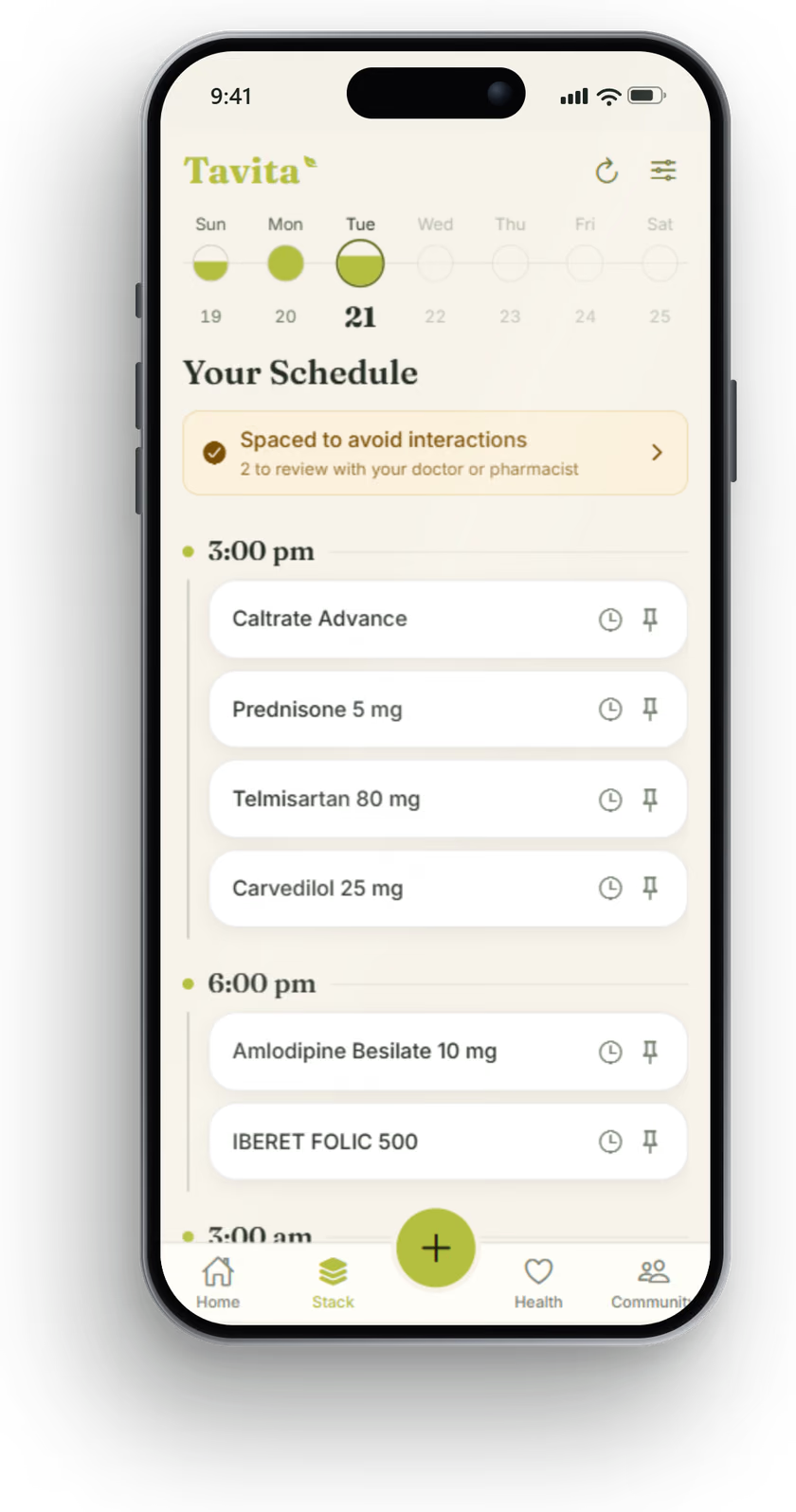
For the transplant pairs in this article, Tavita:
- Treats St John’s wort with tacrolimus or cyclosporine as a hard stop.
- Flags grapefruit with tacrolimus.
- Keeps iron and calcium at different times when it builds your daily schedule.
- Keeps mycophenolate and tacrolimus apart from sevelamer or lanthanum.
At Moderate or Severe, it switches hydration to a fluid limit that tracks against the limit your care team gave you. It never works out a number for you.
It isn’t a medical device or a replacement for your care team. It doesn’t set doses, and if your team gives you a different gap than the app does, follow your team. It’s free to start and you don’t need an account. The free plan includes one schedule build a month. Pro rebuilds anytime and costs $12.99 a month or $59.99 a year.
Common questions
Which vitamins are hard on your kidneys?
The ones your body stores. The National Kidney Foundation says vitamins A, E and K usually don't need to be taken as supplements with kidney disease, because they can build up. High-dose vitamin C is the other one: 500 mg a day has been shown to raise oxalate in the blood, and too much vitamin C can raise the risk of calcium oxalate stones. Among minerals, the NIH says the risk of magnesium toxicity rises as kidney function falls.
Which is better for kidney health, vitamin D2 or D3?
The 2020 KDOQI nutrition guideline doesn't pick one. It suggests either D3 (cholecalciferol) or D2 (ergocalciferol) to correct a low 25-hydroxyvitamin D level, at any stage. Neither is the active form your kidneys make, so your care team may also prescribe calcitriol or a similar drug.
How much vitamin D is safe for kidneys?
The guidelines don't give a kidney-specific number. KDIGO suggests your 25-hydroxyvitamin D level might be measured, and that a shortfall be corrected the same way as for the general population, so the right amount is the one your care team sets from your blood tests. If you take calcitriol, its label says high doses of vitamin D should be withheld during treatment.
Which two nutrients should you avoid if you have kidney disease?
The NIDDK names potassium and phosphorus, along with sodium. But KDOQI says to adjust potassium and phosphorus to keep your blood levels normal, so how much you limit depends on your labs. Ask your renal dietitian what your numbers mean for you.
What can I take naturally to improve kidney function?
No vitamin or herb in these guidelines is shown to restore kidney function. The closest thing is a prescription, not a supplement: KDOQI recommends bicarbonate or citrate, which your care team prescribes when blood tests show too much acid, to slow the loss of kidney function. Before dialysis, it also suggests more fruit and vegetables for the same reason, with your potassium checked. The National Kidney Foundation warns against products sold as a kidney detox or cleanse, and lists herbs such as aristolochia, licorice root and St John's wort as risky.
What vitamins can I take after a kidney transplant?
KDOQI's advice is a diet that meets normal vitamin needs, with a multivitamin only if food falls short. Vitamin D is often prescribed to correct a low level. Your anti-rejection medicine matters more: tacrolimus can lower magnesium and phosphorus and raise potassium, and grapefruit and St John's wort change its levels. Check every supplement with your transplant pharmacist first.
One list, checked against your kidneys
Add your medicines, vitamins and supplements once. Tavita checks them against each other and your kidney setting, and spaces out the pairs that compete, so you have a clear list to take to your nephrologist or pharmacist before you change anything.
Get TavitaFree to start, no account needed. A second check, not medical advice.
Sources and corrections
Guideline statements are quoted from KDOQI 2020 and the KDIGO guidelines below; drug rules come from each product’s FDA label on DailyMed. Food values are from USDA FoodData Central, pulled 4 October 2026. If you spot an error, email support@tavita.app and we’ll correct it promptly. This article is general information, not medical advice. Don’t start, stop or change a vitamin, supplement or prescribed medicine without talking to your care team.
- Ikizler TA, Burrowes JD, Byham-Gray LD, et al. KDOQI Clinical Practice Guideline for Nutrition in CKD: 2020 Update. Am J Kidney Dis 2020;76(3 Suppl 1):S1-S107. Funded by the National Kidney Foundation and the Academy of Nutrition and Dietetics; work group disclosures are listed in the guideline.
- KDIGO 2017 Clinical Practice Guideline Update for CKD-Mineral and Bone Disorder. Kidney Int Suppl 2017;7:1-59.
- KDIGO 2024 Clinical Practice Guideline for the Evaluation and Management of CKD. Kidney Int 2024;105(4S):S117-S314.
- KDIGO 2026 Clinical Practice Guideline for the Management of Anemia in CKD. Kidney Int 2026;109(1S):S1-S99.
- Prescribing information, DailyMed: Prograf (tacrolimus), CellCept (mycophenolate mofetil), Myfortic (mycophenolic acid), calcitriol capsules, Renvela (sevelamer carbonate).
- Product labels, DailyMed: ferrous sulfate tablets, Renal Caps, Dialyvite.
- NIH Office of Dietary Supplements, health professional fact sheets: Vitamin A, Vitamin C, Vitamin D, Iron, Magnesium.
- National Institute of Diabetes and Digestive and Kidney Diseases: Anemia in CKD, Mineral & Bone Disorder in CKD, Healthy Eating for Adults with CKD, Eating & Nutrition for Hemodialysis, Kidney Transplant, Kidney Disease Statistics, Diabetic Kidney Disease.
- National Kidney Foundation: Vitamins in Chronic Kidney Disease, Herbal Supplements and Kidney Disease, Diet After Kidney Transplant.
- DaVita. Renal Vitamins for People on Dialysis.
- Clase CM, Ki V, Holden RM. Water-soluble vitamins in people with low glomerular filtration rate or on dialysis: a review. Semin Dial 2013;26(5):546-67.
- Hallberg L, Brune M, Erlandsson M, Sandberg AS, Rossander-Hultén L. Calcium: effect of different amounts on nonheme- and heme-iron absorption in humans. Am J Clin Nutr 1991;53(1):112-9.
- US Department of Agriculture. FoodData Central, SR Legacy.
- Tavita’s kidney setting, interaction checks and schedule rules are described from the app’s shipping code. Pricing and the free plan are as of October 2026.